The Bigger Picture
Many residents are understandably asking:
This page exists to answer those questions plainly and honestly.
In Short…
Ridgewood is under court pressure to prove it is complying with New Jersey’s affordable housing laws.
That pressure is not about one developer or one site.
It is about whether Ridgewood has a credible, enforceable, town-wide plan — or whether decisions will eventually be imposed by the courts instead of made locally.
Kensington is one proposed piece of that plan.
It is not the entire plan, and it is not the only issue at stake.
Why Affordable Housing Is Driving These Decisions
New Jersey law requires every town to plan for its “fair share” of affordable housing.
This obligation is enforced through the courts, not through voluntary compliance.
When a town is under review, judges ask two core questions:
Do you have a realistic plan to meet your housing obligation?
Do your zoning rules actually allow that plan to happen?
If the answer to either question is “no,” the town risks losing what’s called zoning immunity — meaning courts can override local zoning decisions.
That risk is what’s driving urgency in Ridgewood.
Why There Are So Many Ordinances at Once
Many residents focused on the Kensington overlay ordinance — understandably, because it was the most visible and controversial.
But Kensington was introduced alongside several other ordinances because courts look skeptically at one-off solutions.
From a legal perspective, Ridgewood must show:
Capacity (enough sites or mechanisms)
Good faith (not delaying or avoiding compliance)
Immediate implementation (not vague future promises)
That’s why multiple ordinances are moving together. Read the details of each one, in order.
Ordinance 4071
S-1 Senior Overlay (Kensington / assisted living)
Creates an S-1 “Senior” overlay zoning district for a specific area tied to the Kensington-assisted living concept, meaning the rulebook for what’s allowed on that land changes (it makes an assisted living facility legally possible there where it wasn’t before).
Sets the permitted uses and the development envelope (how tall/big, setbacks, coverage, etc.), which is why residents argue it effectively pre-shapes the outcome even if no site plan is approved that night.
Was discussed as court/settlement-driven, so residents argue the ordinance is being advanced because of legal pressure rather than because it clearly aligns with the Village’s long-term planning vision.
Council emphasized that passing it does not approve a specific building—a real project would still need Planning Board/site plan review—yet residents warned that once this overlay exists, it becomes much harder to stop a large facility later.
“Affordability” in this context was discussed differently than normal affordable housing set-asides (e.g., Medicaid-bed requirements), which critics say can be confusing to residents expecting traditional affordable apartments.
The S-1 overlay is intentionally site-specific, written around the North Maple/Franklin/Marshall parcel rather than as a broadly applicable senior-housing framework, reinforcing concerns that it functions as project-enabling zoning


S-1 Senior Overlay
Ordinance 4072
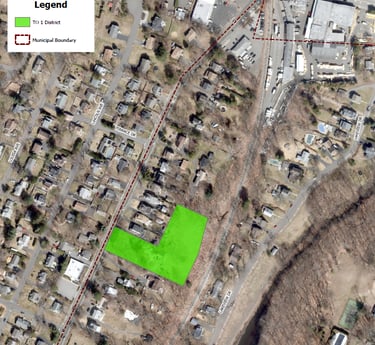
TO-1 Townhouse Overlay (299 Goffle Road)
Creates TO-1 (Townhouse Overlay 1) for the single property at 299 Goffle Road, meaning the underlying zoning stays but the owner gains an additional, more intense development option for that parcel.
Enables townhouse-style housing types (including stacked townhouses) with a defined scale discussed at the meeting (e.g., up to ~15 units/acre and up to 3 stories / 40 feet), which residents view as out of character and too large for the immediate neighborhood context.
Includes technical rules on setbacks, access, parking, and buffering—but residents argued those “guardrails” don’t solve the real impacts (traffic, drainage, construction disruption, privacy), especially before any studies are locked in through a site plan.
Requires an affordable component (discussed as a 20% set-aside) if the overlay pathway is used, which supporters frame as compliance-oriented, but residents argue can incentivize bigger proposals to make projects financially viable.
The Village stated this is a zoning change, not a project approval, but neighbors testified that it still changes the baseline—making a larger build next door more likely than under the old rules.
Officials confirmed that traffic, drainage, and circulation impacts would be evaluated during future site plan review, not before rezoning—raising concern that the overlay is adopted without first confirming whether the site can realistically support the allowed intensity.
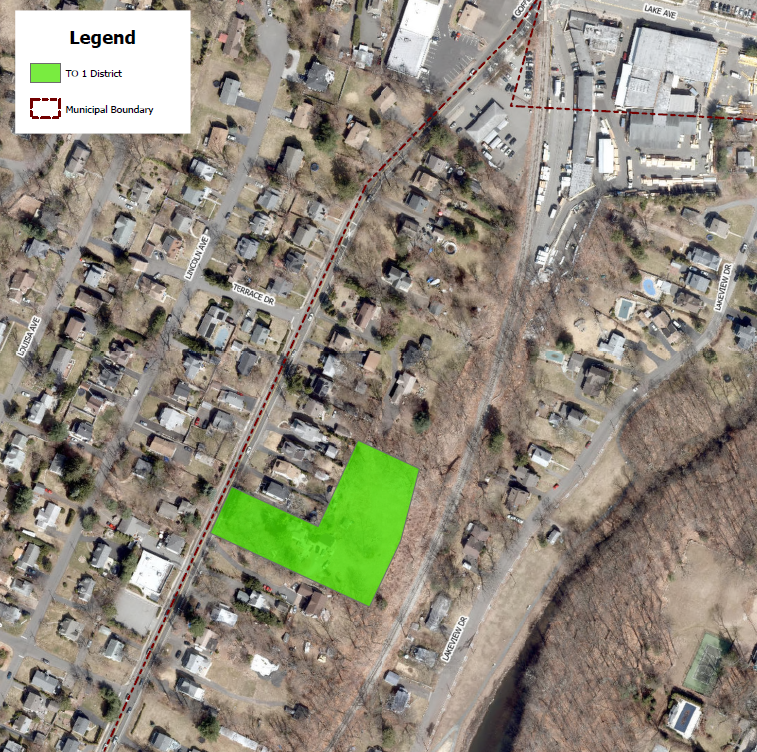
TO-1 Townhouse Overlay
Ordinance 4073
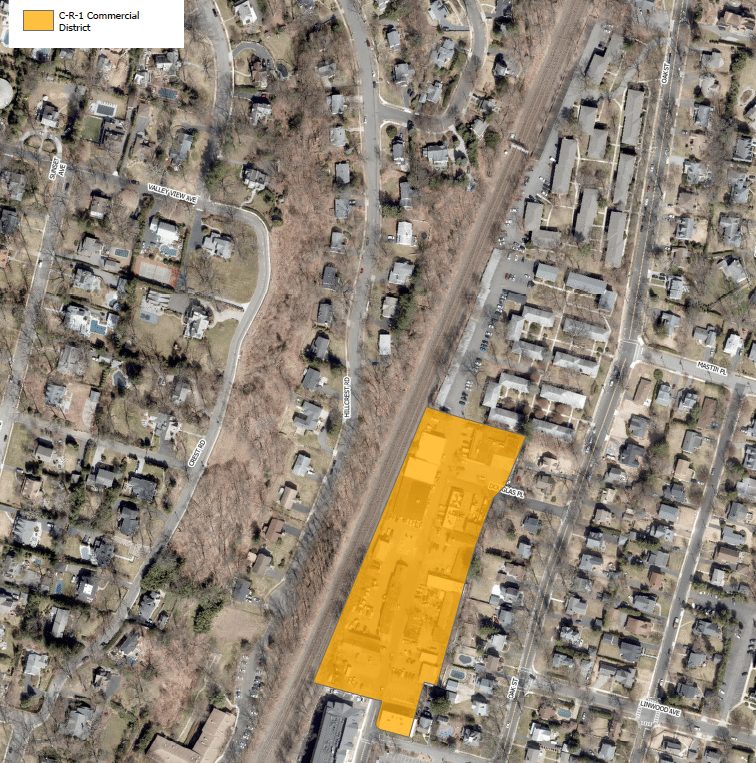
CR-1 Commercial Residential District (Chestnut Street corridor)
Creates a new base zoning district called CR-1 along the Chestnut Street corridor, meaning the Village isn’t just adding an “overlay”—it’s reclassifying the area to allow a more residential/mixed-use future by right.
Allows mixed-use (commercial + residential) and multifamily residential in that corridor, typically with an affordable requirement (discussed as 20% set-aside), which residents say is a major shift in what the street can become.
Sets a higher intensity envelope discussed at the meeting (e.g., up to ~30 units/acre and ~45 feet height, with additional controls above ~40 feet), which critics say invites buildings that feel too tall and too dense for a corridor that transitions near homes.
Includes transition tools (stepbacks near rear property lines and balcony/privacy limits), but residents argued these measures don’t prevent the “wall effect” and won’t fix knock-on impacts like parking overflow, traffic, and drainage.
Like the others, it doesn’t approve a specific development, but residents warned it creates the legal pathway for projects of a size and form the Master Plan never contemplated for that stretch.
Officials emphasized that CR-1 establishes residential and mixed-use development as permitted uses “by right,” which limits the Planning Board’s ability to deny compliant projects and shifts debates from “should this happen” to “how big can it be.”
CR-1 Commercial Residential District
Ordinance 4074
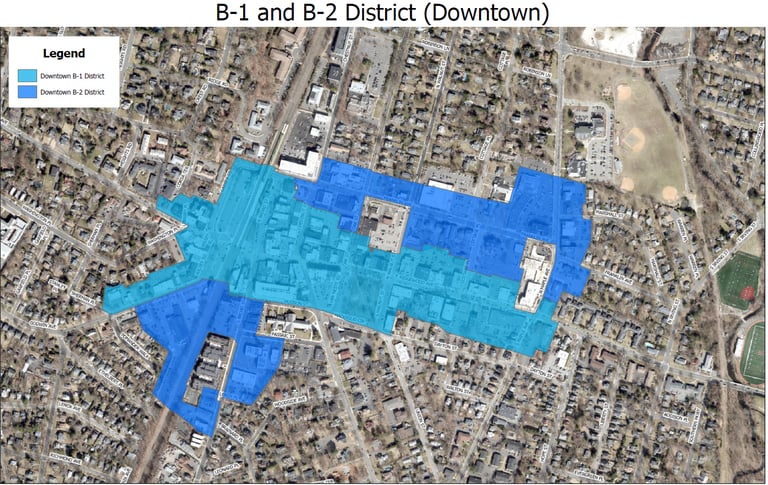
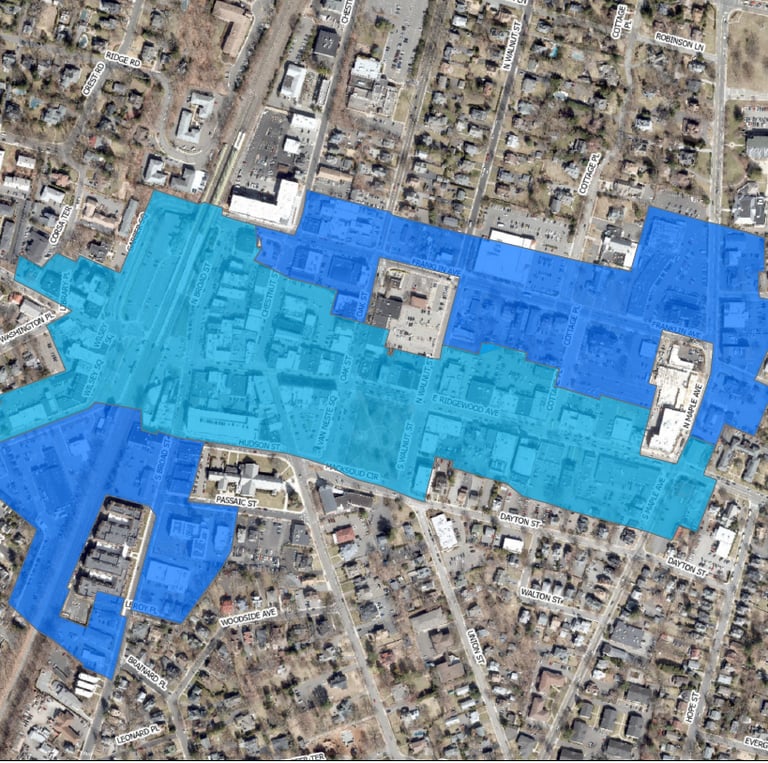
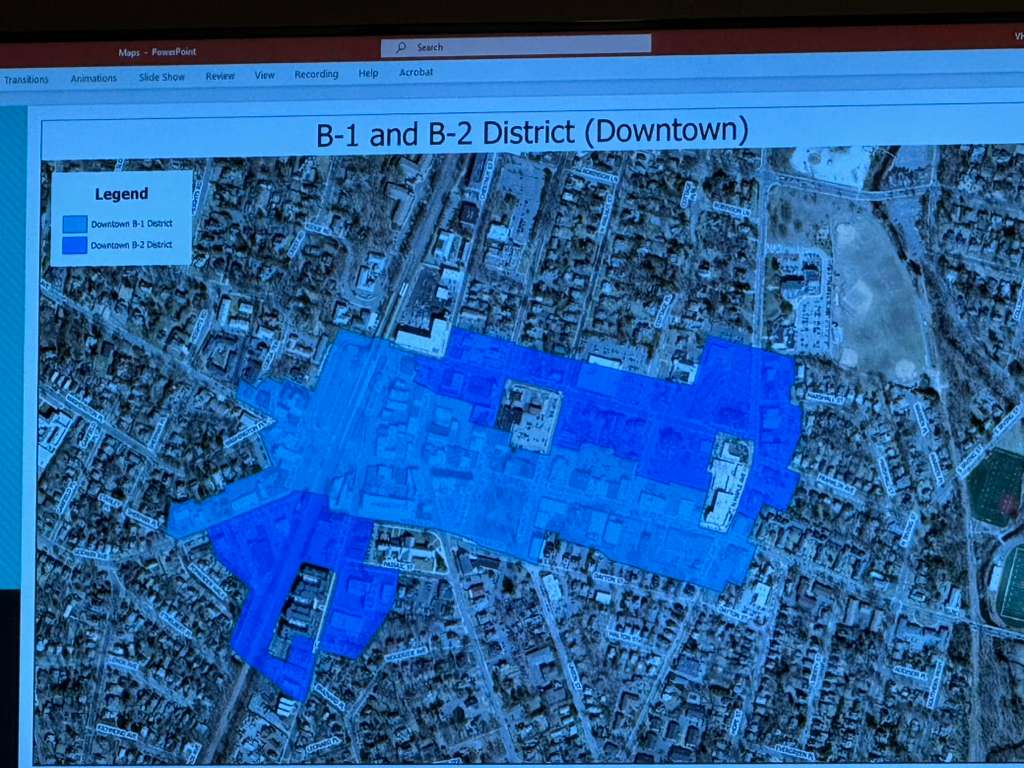
B-1 / B-2 Downtown District Changes (downtown + targeted South Broad area)
Updates standards in the B-1 and B-2 downtown zoning districts, which is essentially rewriting what kinds of residential density and redevelopment patterns downtown can support.
Increases allowable residential density when affordable housing is included (discussed as 18 → 20 units/acre) and creates a targeted higher-density area (discussed as up to ~24 units/acre) on the west side of South Broad Street outside historic constraints—meaning some downtown parcels could pursue bigger housing outcomes than before.
Residents pressed for clarity on what this unlocks in real life: adding second/third stories, conversions of existing sites, and how parking obligations work—because the practical effect could be more residents downtown without a clear parking/circulation plan first.
Critics argue this conflicts with Master Plan expectations about downtown scale and infrastructure readiness, because it raises permitted intensity while core constraints (parking, traffic flow, pedestrian safety) are still unresolved.
The Village framed it as zoning policy only, but residents emphasized that once these numbers are in law, future applicants can cite them as the new normal when seeking approvals.
Officials acknowledged that parking standards and real-world capacity remain unresolved issues downtown, with no comprehensive parking strategy presented alongside the increased residential allowances.
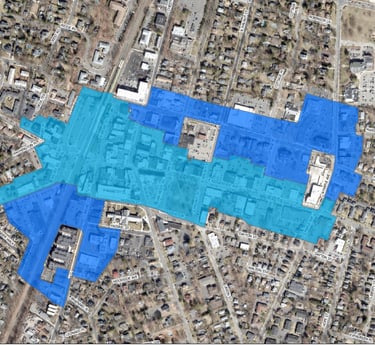
B-1/B-2 Downtown
Ordinance 4075
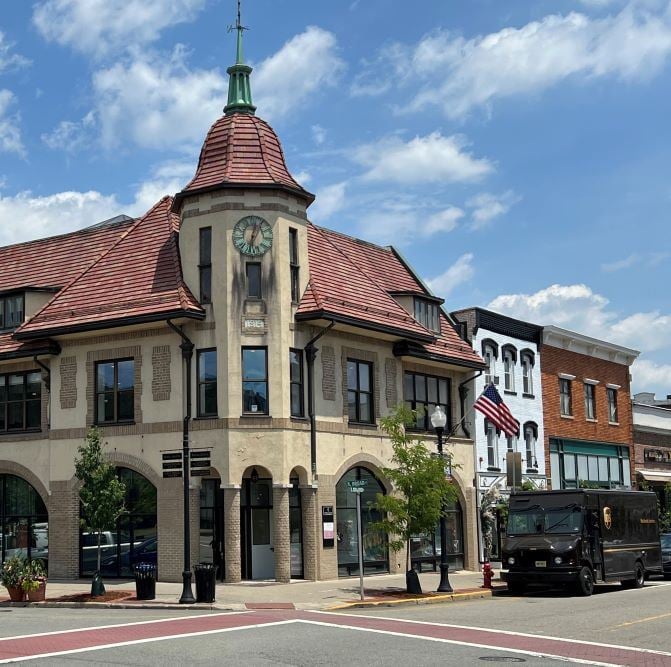
Mandatory Affordable Housing Set-Aside Increase (village-wide)
Changes the Village’s mandatory inclusionary affordable-housing requirement for new residential development, meaning any future project that creates housing under certain approvals must dedicate a larger share to affordable units.
The meeting described a move from the prior split standard (often described as 15% rental / 20% for-sale) to a flat 20% requirement regardless of tenure, so the affordable obligation is higher and more uniform across project types.
Applies village-wide (it’s not a map change), which means it doesn’t rezone your street directly—but it changes the rules that attach when housing is proposed/approved anywhere in town.
Residents argued that while it sounds like a simple affordability win, it can also push developers toward larger, denser projects to make economics work—potentially increasing variance requests and cumulative impacts.
It doesn’t approve any project by itself, but it sets a new baseline that shapes what kinds of proposals are financially and legally likely going forward.
Residents raised questions about long-term enforcement, monitoring, and resale/rent controls for affordable units, but detailed implementation mechanisms were not addressed during the meeting.
Affordable Housing Set-Aside Increase
The Five Categories
From a legal perspective, Ridgewood must show they are making a good faith effort. Here are the 5 ways to comply:
Housing Element & Fair Share Plan


A planning document outlining Ridgewood’s obligation and strategies. It states how many affordable units Ridgewood must plan for and lists the strategies Ridgewood intends to use. It explains the theory and does not approve construction
Overlay / Rezoning Ordinances
These create zoning pathways that could allow affordable housing to be built. Kensington falls into this category.
They demonstrate village-wide planning, not a single deal. These ordinances do not issue building permits, finalize designs or eliminate planning board review. They exist to show the court that zoning capacity exists.
Accessory Dwelling Units (ADUs)
ADUs allow small units — like garage apartments or in-law suites — to count toward housing obligations. ADUs do not affect the Kensington site.


Inclusionary Zoning
Requires future residential developments to include affordable units. This ordinance is about preventing future pressure, not approving current projects.
Provides funding mechanisms courts expect to see
Affordable Housing Trust Fund
Where Kensington Fits
Kensington is one compliance mechanism — not the whole plan.
Kensington is:
One compliance mechanism
One site
One strategy among several
Kensington is not:
Automatically approved
The only way Ridgewood can comply
The only development that could follow if zoning decisions are poorly handled
This distinction is critical.
Why Residents Are Still Right to Be Concerned
Even when affordable housing obligations are real, how a town complies still matters.
Poorly designed zoning can:
Set dangerous precedents
Invite larger or denser proposals
Reduce future negotiating power
Shift decisions from local boards to courts
Once zoning immunity is lost, resident input matters far less.
That is why engagement before ordinances are finalized is so important.
This Is Not Just a Ridgewood Issue
Across New Jersey, towns are grappling with:
Court-driven housing mandates
Aggressive development pressure
Environmental and infrastructure strain
Loss of local planning control
Many communities are pushing back — not against affordable housing, but against overdevelopment without balance or local input.
Ridgewood is not alone.
Learn More: External Resources
These organizations and discussions provide broader context and insight into what towns across New Jersey are experiencing:
Local Leaders for Responsible Planning (LLRP): A coalition of municipal leaders focused on balancing housing obligations with responsible land use.
Montvale Mayor’s Fight Against State-Driven Overdevelopment: An example of how multiple towns are challenging the scale and pace of court-imposed housing pressure.
NJ – Stop the Madness of Overdevelopment & Environmental Destruction: A statewide Facebook group where residents share experiences, legal developments, and organizing efforts.
(Inclusion of these resources does not imply endorsement of every position expressed, but reflects the broader statewide conversation.)
You can also follow us on Facebook or join our Facebook group.
Contact
Quick links
© 2025 Ridgewood Neighborhoods United.
A volunteer-run information site by Ridgewood residents; not affiliated with the Village or Kensington. Content is informational only and not legal advice. Trademarks belong to their owners.